How to build credit at 18: the real playbook for 2026
The 2026 version — no-fee secured cards, authorized-user shortcuts, and the four-move path from invisible file to 700+ score in twelve months.
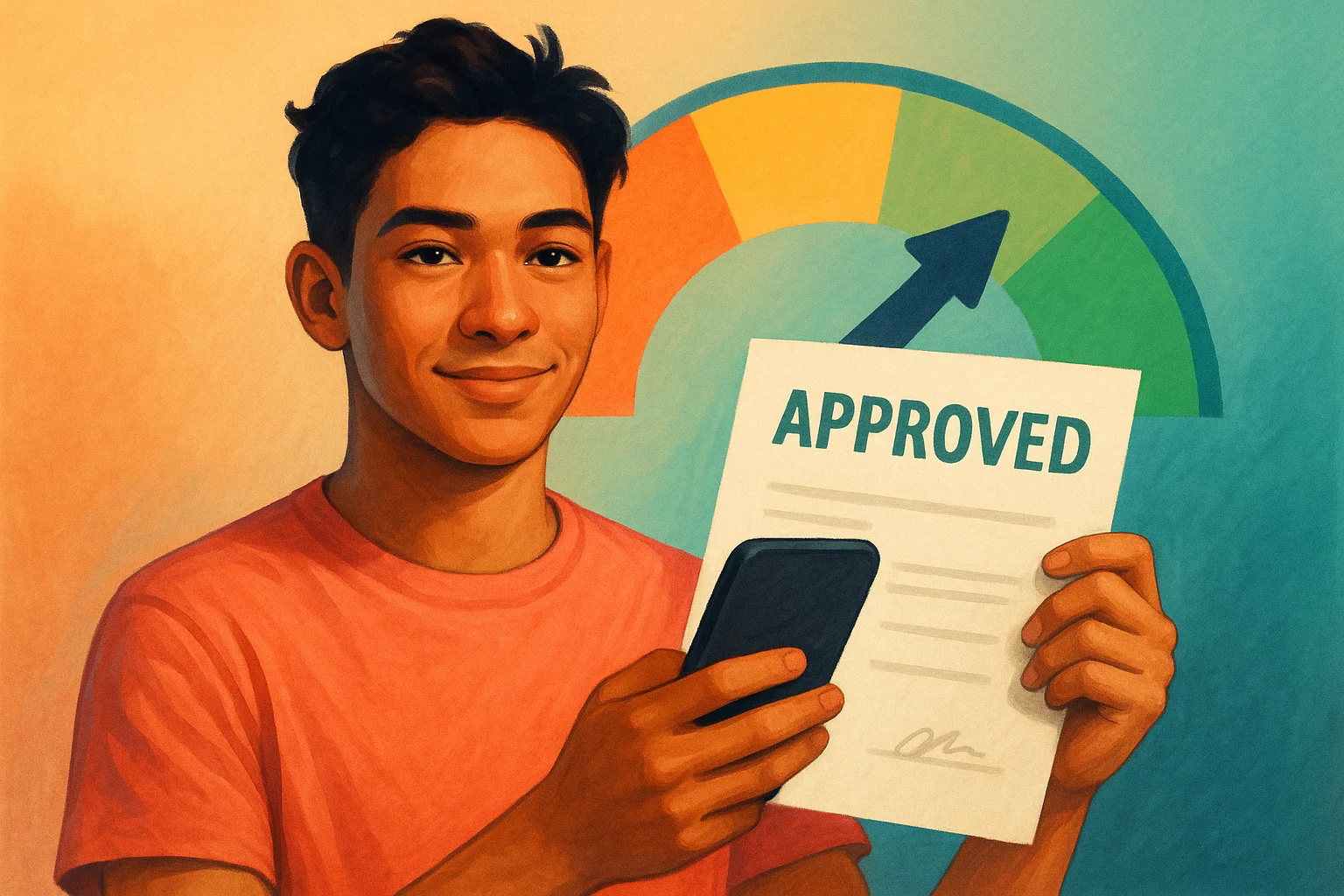
The 2026 credit game is different. Gen Z's average FICO just dropped to 676, the lowest of any generation per FICO's 2025 Credit Insights Report. Apartment underwriters got stricter. Student-loan reporting restarted. The "just get any credit card" advice from 2019 doesn't cut it anymore.
Turning 18 this year? You need a cleaner playbook. Here it is — what's changed, what still works, and the exact moves that get you to a 700+ score by your 19th birthday. No fluff. No $30-a-year secured cards. No weird campus credit card booths with the free t-shirts.
What's actually different in 2026
Two things shifted recently that make building credit at 18 a different conversation than it was even two years ago.
The generational score gap widened. Gen Z sits at 676, Millennials at 690, Gen X at 709, and Boomers at 747, per Experian's 2025 State of Credit data. Lenders see the gap, and first-time applicants are getting underwritten harder than they were in 2023.
The minimum deposit on most traditional secured cards climbed to $300. A couple of no-fee cards from credit unions still let you start at $49, but the good ones are mostly gone. No-fee fintech options — like Step — are the cleanest way around that deposit in 2026.
The playbook below is built on those two changes.
Option 1: a no-fee secured card (the 2026 default)
A secured credit card to build credit is still the cleanest way to start at 18. The difference in 2026 is this: don't pay for one. The "pay $25 to $49 a year for a secured Discover" move is tax on your financial illiteracy. Skip it.
What a 2026 no-fee secured card should do:
Report to all three bureaus (Equifax, Experian, TransUnion)
Zero annual fee
Zero APR, because the balance auto-settles every cycle
No credit check to open (your file is empty, they can't check what isn't there)
Ship a card that works in Apple Pay the same day you open the account
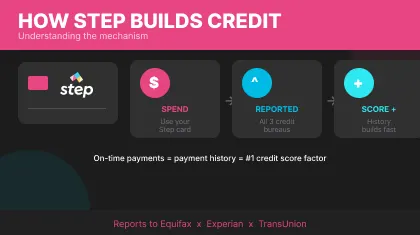
A credit building app like Step hits all five. Step users in their 20s increase their credit score by an average of 57 points in one year, and 7M users have opened accounts through the app. The point isn't that Step is flashy. It's that Step is boring in the exact right ways. No missed-payment risk. No fee. The money stays yours.
Option 2: authorized user on a parent's card
Got a parent with good credit who's willing? This is free credit age.
You piggy-back on their longest-standing card, and twelve years of on-time payments appears on your file the moment you're added. Free.
The 2026 catch list:
Amex, Chase, and Discover still report authorized users. A lot of smaller issuers don't — confirm before you add.
Your parent's missed payment becomes your missed payment. Pick a perfect-history account.
If they close that card later, your credit age collapses. Talk about it upfront.
If a parent's 2012-opened Chase Sapphire is on the table? Get added. That's a 14-year boost to the "length of credit history" factor, which is 15% of your score. Worth 20 to 60 points on its own depending on your file. Not a typo.
Option 3: credit-builder loan (second account only)
Self, Kikoff, and most credit unions offer credit-builder loans. You pay $25 to $50 a month, the money sits in a locked savings account, and you get it back twelve months later minus fees and interest.
It works. It's slow. You're paying to save your own money.
Use it as a second account after you already have a card — for credit mix (10% of your score) — not as your first move.
How to build credit with no credit history
This is where most 18-year-olds get stuck. Your file is empty. Not "bad." Invisible.
The fix is one trade line, paid on time, for one to six months. Here's the exact sequence:
Day 1: open one no-fee secured card. Aim for instant approval with no credit check.
Day 1: set up autopay for the full balance from checking.
Day 1: put one recurring charge on it — Spotify, gas, your phone bill.
Day 30: first statement closes. Utilization should be under 10%.
Day 30–90: your first VantageScore appears (VantageScore needs as little as one month of history).
Day 180: your first FICO score generates (FICO requires 6 months of credit history on a reported account).
Day 180: add a second trade line (authorized user, credit-builder loan, or a second low-limit card).
Day 365: 700+ is a realistic outcome if you've been boring.
The understanding credit scores guide breaks down how the 5 FICO factors weight against each other — including why 6 months is the magic number for FICO.
The 2026 mistakes to avoid
Short list because I watch 19-year-olds do every single one of these on Reddit every week:
Opening three store cards in a weekend for the 15% off (every hard inquiry tanks a thin file)
Closing the card your parent added you to the second you "upgrade" to your own
Paying only the minimum because the app says it's okay (interest stacks fast)
Ignoring one bad month because you moved and the email bounced
Carrying a balance on purpose because someone told you that "builds credit" (it does not — utilization above 30% hurts)
One missed payment on a thin file is the worst version of this. A credit card reported 30 days late at age 18 can drop a 670 to a 580 and sit on the report for 7 years. (Most credit card issuers report at day 30; federal student loans typically wait until day 90.) Autopay the minimum on everything. Then pay in full manually.
What to expect in 12 months
Month 1–3: first VantageScore shows up, typically 640–690. Month 6: first FICO score generates; utilization discipline starts to compound. Month 9: credit mix kicks in after the second account. Month 12: 700+ is a realistic outcome — not guaranteed, but the common path for clean files.
That's the 57-point arc Step users hit. Not magic. Not hustle. Just the five factors doing their thing while you forget they're running in the background.
Start the clock 👇
The best version of your 2026 credit score is the one that starts today. Thirty days from now, you'll have a first statement. Six months from now, you'll have a FICO score. A year from now, you'll be applying for your first apartment with a file lenders actually want to see.
Grab a free credit building app, open the account, put one charge on the card, and set autopay.
That's the whole 2026 playbook. Everything else is variations on those four moves.