Will student loans hurt my credit? And can I buy a car with student loan debt?
Q1 2025 was the first full quarter missed student-loan payments hit credit reports again after the on-ramp ended. The three scenarios, the car-loan math, and the four-move playbook.
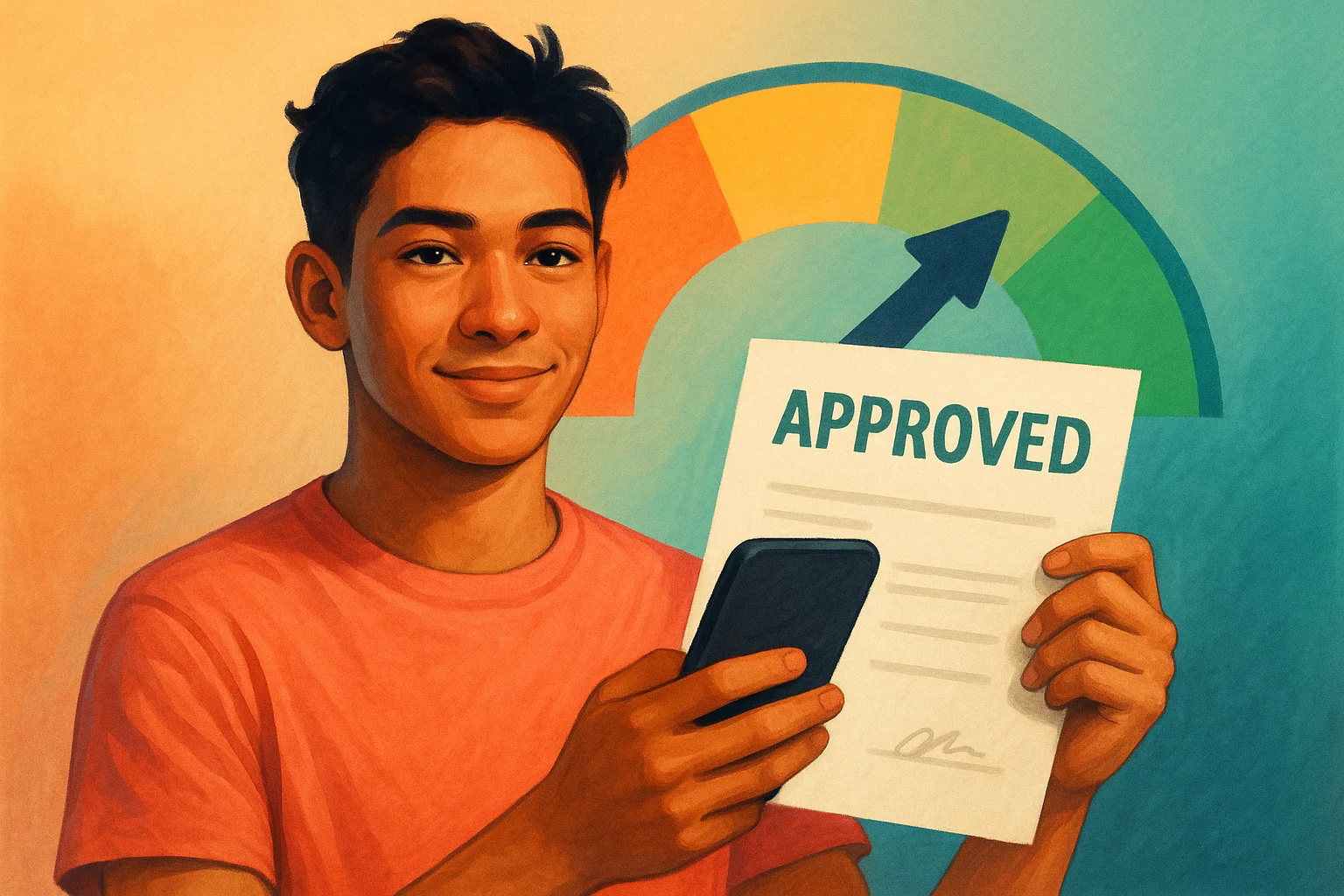
Federal student loan payments resumed in October 2023 after the pandemic pause, but the Department of Education held off on credit reporting during a 12-month on-ramp period that ended September 30, 2024. Credit bureaus started receiving missed-payment data again in October 2024, and Q1 2025 was the first full quarter of damage to appear on reports.
Which means millions of Gen Z and millennial borrowers are watching their credit scores move for the first time in years, mostly not in a good direction.
Two questions are blowing up right now: "Will student loans hurt my credit?" and "Can I buy a car with student loan debt?" The short answer to both comes down to one thing.
The short version
Will student loans hurt your credit? No, if you pay on time. Yes, and hard, if you miss payments long enough for your servicer to report it. A single reported late payment can drop a thin-file Gen Z score by 90 to 110 points.
Can you buy a car with student loan debt? Yes. The lender looks at your debt-to-income ratio, not whether the debt is "good" or "bad." Student loans in repayment, paid on time, barely move the auto-loan approval needle. Student loans in default absolutely end the conversation.
That's it. Now the longer version — because there's nuance that matters.
How student loans show up on your credit report
A student loan is an installment loan. Fixed amount. Fixed monthly payment. Fixed payoff date. It shows up on your report as one trade line per loan. Five separate federal loans (most people do)? That's five trade lines.
The good news for your score:
Installment debt boosts credit mix (10% of your FICO)
On-time payments build payment history (35%)
A student loan opens a long trade line early, which helps the length of history (15%)
Pay on time, every time, and student loans are a net positive for your credit. That's why a lot of Gen Z borrowers had their best-ever scores in 2023 — three years of forced, on-time "payments" of $0 during the pause still counted as on time.
The bad news:
A reported late payment can drop your score up to 90–110 points on a thin file
Federal loans enter default after 270 days of non-payment, which drops scores 150+ and sticks for 7 years
Defaulted federal loans can be sent to collections. Another hit.
The student loan repayment restart caught a lot of people off guard because the pause made student loans feel like they had disappeared. They hadn't. Many servicers canceled auto-debit during the pause, so borrowers who assumed it was still active missed the first bill when real amounts started landing in late 2023. That's what has been fueling the credit-report damage rolling in since the on-ramp ended.
Will student loans hurt my credit? Three scenarios
Scenario 1: You pay on time every month
Best case. Your score slowly climbs 10 to 30 points over 12 months just from the added on-time trade lines and credit-mix boost. This is the outcome most people expect and will get if they set up autopay.
Scenario 2: You miss one payment, but catch up within 89 days
Annoying but survivable. Your servicer charges a small late fee, and federal servicers typically don't report to the bureaus until 90 days past due. Pay the missed amount before day 90, set autopay, and move on. (Note: private student loans often report at day 30, so this window only applies to federal.)
Scenario 3: You miss a payment by 90+ days
This is the cliff.
Day 90 is when federal servicers report the delinquency to Equifax, Experian, and TransUnion. Your score drops 90–110 points for a single serious delinquency on a thin file. It starts healing after six months of on-time payments, but it stays on your report for seven years.
Keep missing payments past day 270, and the loan goes into default — another 150-point drop, plus the account gets sent to collections.
Already behind? Call your loan provider the day you realize. Most federal servicers will offer retroactive income-driven repayment that can help cure recent delinquency. Do not ignore the letters. Do not change your phone number. Pick up and address the situation.
Can I buy a car with student loan debt?
Yes. Here's the math auto lenders actually run.
They're checking your debt-to-income ratio (DTI) — how much of your monthly income goes to existing debt. A standard auto loan approval requires a DTI below 45%. Some lenders go to 50%. After adding the projected car payment, your total DTI should still be under 50%.
Example one. You make $4,000/month. Student loan is $220/month. You're considering a car with a $350/month payment. That's $570/month in total debt, or 14.25% DTI. Should be an easy approval.
Example two. You make $3,000/month, gross. Student loans are $480/month, you're shopping for a car that will cost $500/month, and you also have $150/month in credit card minimums. That's $1,130/month in debt on $3,000/month — or 37.7% DTI. Still approvable, but you're getting offered a higher rate because you're closer to the ceiling.
Where it actually breaks:
Student loans in default (DTI is irrelevant; the score is too low)
Income under $2,500/month with $500+ student-loan payments (the math just doesn't work)
Buying a car too soon after a reported late payment (dealers run credit right after the delinquency posts — the rate will be ugly)
Credit score 650+ and DTI with the new car payment under 45%? You're buying the car. Student loans are not a blocker.
The 2026 playbook for student loans + credit
Four moves that protect your score no matter what's happening with the loans.
1. Set autopay, today
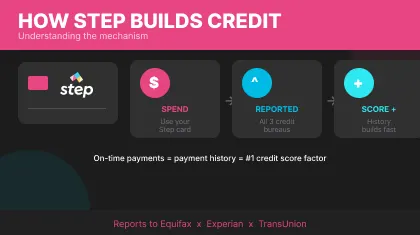
Five minutes. Log in, set autopay, and confirm the first deduction hits. This one action prevents 95% of student-loan credit damage. Better yet, when you use a Step Visa Card, each payment will also help you build credit.
2. Confirm income-driven repayment if the standard payment is a stretch
If your payment is over 10% of your take-home and you're already tight on cash, call your loan provider and ask about IBR or the new Repayment Assistance Plan (RAP). SAVE was repealed in 2025, and PAYE is being phased out, but IBR and RAP can reduce your payments and, in some cases, bring them all the way down to $0 for low-income households.
And $0 on time still reports as on-time. Your credit is protected even when you can't afford the standard amount.
3. Pull your credit report quarterly
Free at annualcreditreport.com. Check that every student-loan trade line is reporting correctly. Disputing an incorrect late payment takes 30 seconds and can swing your score by 80 points.
4. Keep a second credit account active
Don't rely on student loans as your only open trade line. A low-fee credit card or a secured credit card to build credit gives you a second path to good credit even if a student-loan payment goes sideways. Step users in their 20s increase their credit score by an average of 57 points in one year using this combined approach.
For the full mechanics of how each factor weighs against the others, the Step understanding credit scores guide breaks it down.
The one thing most borrowers miss
Your student-loan provider is not your enemy.
They're a massively underfunded call center being asked to manage over 40 million accounts, and their hardship programs are easier to qualify for than people realize. Struggling? Call them before the 90-day mark. Many reported late payments could have been avoided with a 5-minute phone call.
A credit-building app is a good backstop. A good phone call with your loan provider is the actual fix.
Protect the score
Student loans don't have to hurt your credit. Cars don't have to wait until the loans are paid off. Both come down to one habit: on-time payments, every month, with autopay turned on.
Worried about your score right now? Pull your report, set autopay, and check the damage. If there's a late payment from the restart on there, call the provider about retroactively curing your account.
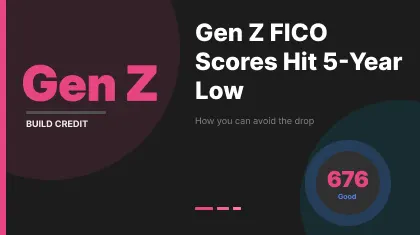
Gen Z's average FICO has slid into the mid-670s as student loan repayments hit reports again. But this does not have to be you. Take it one step at a time. Monitor your score, your loans, and set yourself up for success.