Common Credit Report Errors That Could Be Hurting Your Score


You finally check your credit report and something feels off. There's a late payment you swear you paid on time. An account you don't recognize. A balance that's way higher than it should be.
Credit report errors are incredibly common. Roughly 1 in 5 people have at least one mistake lowering their score or blocking approvals. A single error can drop your score by 50+ points, and most people don't even know it's there because they never check.
The good news? If you catch these errors and dispute them, you can often get them removed and watch your score jump back up. This guide breaks down the most common credit report errors, why they matter, and exactly what to do if you find one.
The Most Common Credit Report Errors You Need to Check For
Not all errors are created equal. Some are annoying but harmless. Others can absolutely wreck your credit. If you're short on time, start by checking for these.
Payment History Errors (The Most Damaging)
These are the worst because payment history is the biggest factor in your credit score.
Payments marked late when you paid on time: One of the most common and most damaging errors. If you have proof you paid, challenge it with the bureau immediately.
Late payments reported during forbearance or deferment: If you were on a payment plan or had loans deferred, those months shouldn't count as late.
Incorrect delinquency dates: Can keep mistakes on your credit file longer than they should be.
Charge-offs reported inaccurately: If the date or amount is wrong, that matters since charge-offs stay visible for seven years.
Accounts That Don't Belong to You
Fraudulent accounts: Someone opened a credit card in your name. That's identity theft.
Mixed files: Happen when the credit bureau accidentally merges your info with someone else's, so their debt appears under your name.
Duplicate accounts: The same account listed twice, making it look like you have more debt than you do.
Balance and Credit Limit Errors
Your credit utilization is a huge part of your score. If your balances or limits are wrong, your utilization looks worse than it is.
Incorrect balances: Happen when you pay down your card but the old balance is still there months later.
Missing or incorrect credit limits: If your limit isn't reported or it's too low, your utilization percentage shoots up.
Paid-off accounts still showing a balance: You cleared a loan months ago but it's still listed as active debt.
Collections Errors
Collections that don't belong to you: Debt collectors sometimes report to the wrong person or report the same debt twice.
Paid collections still showing as unpaid: You settled or paid it off but it's still listed as outstanding.
Medical collections reported incorrectly: Medical debt has specific rules about when it can be reported. If it hit collections too early, it shouldn't be there.
Zombie debt: Old debt that's past the seven-year reporting window but somehow reappears.
Other Common Errors
Closed accounts marked as open (or vice versa): If you closed a credit card but it's listed as active, that messes with your available credit calculations. Same if an open account appears closed.
Unauthorized hard inquiries: If you see a hard inquiry you didn't authorize, that's a red flag. Could be identity theft or a lender pulling your credit without permission.
Personal information errors: Like wrong names or addresses can lead to mixed files where someone else's credit history gets added to yours.
Incorrect account open dates: Make your credit history look shorter than it actually is, which can hurt your score.
How to Check Your Credit Report for Errors
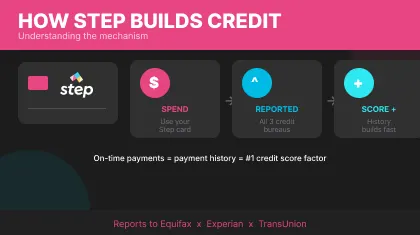
Pull your credit report for free from all three bureaus (Equifax, Experian, TransUnion) once a year at AnnualCreditReport.com. Or check anytime through the Step app without affecting your score.
Focus on the high-impact stuff first: payment history, account balances, accounts you don't recognize, and collections.
What to Do If You Find an Error on Your Credit Report
Gather your proof: Bank statements, confirmation emails, anything that shows the error.
File a dispute with the credit bureau: You can do this online, by mail, or over the phone. The bureau has 30 days to investigate.
Contact the company that reported the error: Sometimes they'll fix it faster than the bureau will.
Follow up: Check back after a few weeks to make sure it's being handled.
Once the error is removed, your score should update within a month or two. Sometimes the jump is huge, especially if the error was something major like a late payment or collections account.
How to Avoid Future Credit Report Errors
Check your credit report regularly through the Step app. Catch mistakes early before they have time to do damage.
Keep records of your payments. Save confirmation emails and bank statements so you have proof if a lender reports something wrong.
Report identity theft immediately. If you see accounts or inquiries you didn't authorize, file a report with the FTC and freeze your credit.
Get errors removed as soon as you find them. The longer something sits on your report, the harder it can be to prove it's wrong.
Start Monitoring Your Credit Today 💳
Credit report errors are way more common than they should be. If you're not checking your report regularly, you might not even know one is dragging your score down right now.
The good news is that most errors can be fixed. You just have to catch them first. Use a credit building app like Step to keep tabs on your credit and start building your score the right way.